Raw Material Composition
The dominant raw material for commercial stretch wrap film is Linear Low-Density Polyethylene (LLDPE). LLDPE is synthesized via copolymerization of ethylene and alpha-olefin monomers. The most widely applied alpha-olefin comonomers include butene, hexene, and octene.
Selecting higher-molecular-weight alpha-olefins such as hexene or octene delivers noticeable improvements to core film performance: most notably greater elongation at break and superior puncture resistance, which are highly valued for heavy-duty pallet wrapping applications.Besides LLDPE, alternative polyethylene grades and PVC materials can also be adopted for special-purpose stretch films.
Stretch film can reach up to 500% elongation at break in lab testing. However, during real-world packaging operations, operators typically stretch the film only within 100-300% of its original length. After mechanical stretching, the material’s inherent elastic recovery force works continuously to hold pallet loads tightly secured.
Two Main Manufacturing Technologies
There are two primary industrial production methods for stretch wrap: blown film extrusion and cast film extrusion.
Blown Film Process
In the blown film process, polymer resin is fully melted and extruded out through an annular circular die. The extruded bubble tube is then cooled by ambient air.This production method runs at a relatively low line speed, yet it produces stretch film with excellent self-cling properties.One major downside of blown technology is unstable extrusion consistency, which may create thickness and performance variations across the film roll web. Lower hourly production output also results in higher overall manufacturing costs.
Cast Film Process
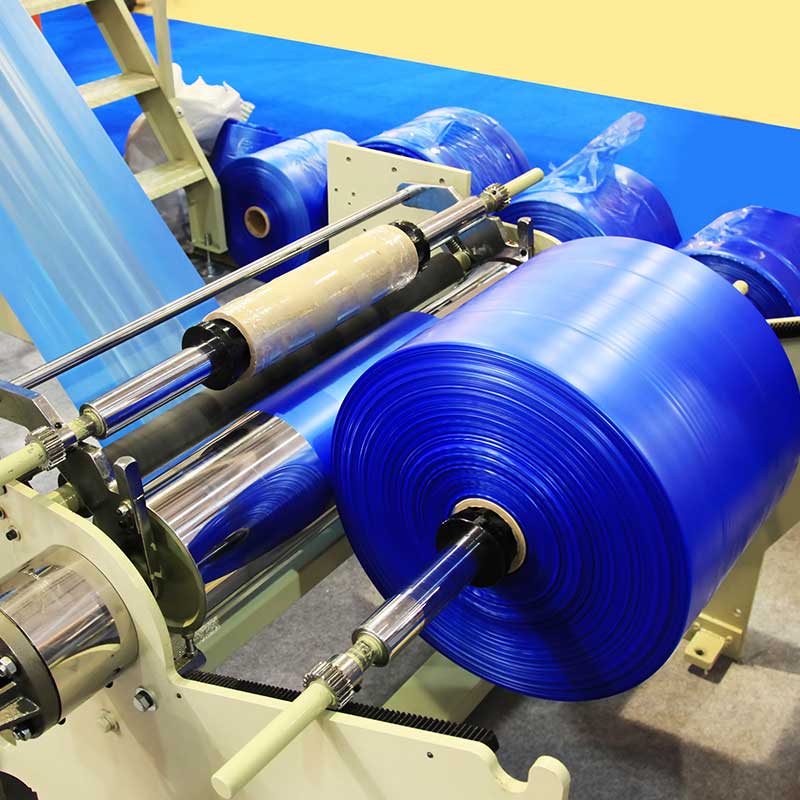
For cast stretch film, molten resin is extruded through a flat slot die, and the fresh film web immediately contacts temperature controlled cooling rollers for fast, uniform cooling.Rapid roller cooling brings multiple benefits: cast stretch film shows outstanding consistency across the whole roll and delivers stable overall mechanical performance.Its self-cling performance cannot match blown film, but cast extrusion supports much higher hourly output volume and reduces unit production costs. Cast film is widely preferred for machine-applied high-volume wrapping.
Additional Critical Performance Indicators
Apart from stretch capability, puncture resistance and elastic recovery, multiple characteristics determine real-world service performance of stretch wrap:
- Break strength: resistance against tearing under pulling force
- Cling: self adhesion property that allows film layers to stick to one another
- Clarity: optical transparency for visual inspection of packaged goods
- Tear resistance: ability to resist propagating rips
- Static discharge performance: anti static properties for electronics related packaging